Beyond Collateral: How Documented Farm Operations Are Unlocking a New Era of Agricultural Credit

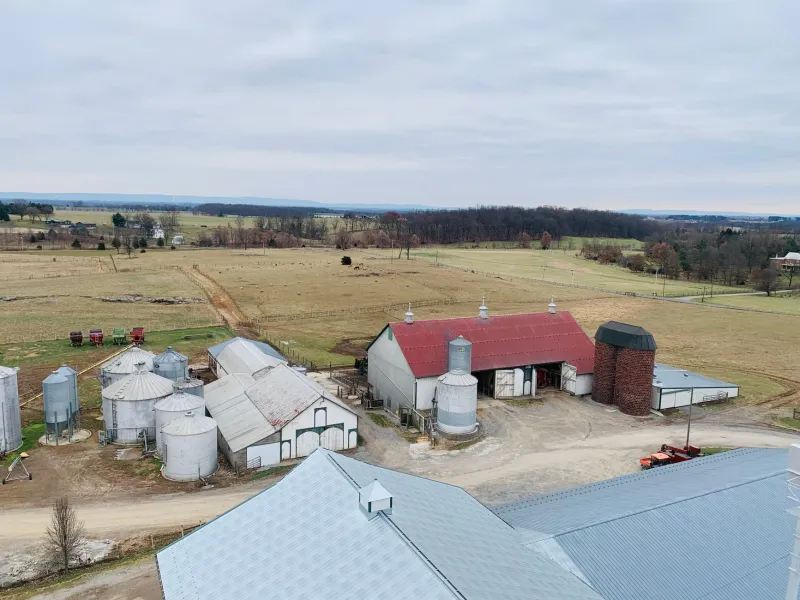
Photo by Photo by Mugabi Owen on Unsplash on Unsplash
For generations, American farmers seeking credit have navigated a financial landscape built on land appraisals, equipment valuations, and the subjective judgment of loan officers who may never have set foot on a working farm. The result has been a persistent gap between what agricultural operations actually produce and what lenders are willing to recognize when structuring loans. That gap, long accepted as an immovable feature of rural finance, is beginning to close — and standardized farm registry data is proving to be the instrument doing the work.
Across rural banking institutions and agricultural credit unions from the Midwest to the Southeast, a quiet but consequential shift is underway. Lenders are increasingly asking a new question before assessing land value or equipment inventories: What does the documented record of this operation actually tell us?
The Structural Problem With Traditional Agricultural Lending
Agricultural credit has historically relied on what might be called a "hard asset" framework. Loan officers evaluate real property, machinery, and livestock as the primary indicators of creditworthiness. While this approach offers lenders a degree of security, it creates a fundamental blind spot: it tells a financial institution very little about how well a farm actually operates.
A 500-acre operation with aging equipment and modest land values might, in practice, run with exceptional efficiency — diversified revenue streams, strong yield consistency, and responsible input management. Under traditional assessment models, however, that farm may receive less favorable terms than a larger operation with significant assets but erratic production history. The farm's actual performance, absent documented records, simply cannot be measured with confidence.
This is precisely the problem that standardized registry participation is beginning to address. When farmers maintain consistent, verified records through platforms like FarmRegistry USA — documenting crop rotations, yield histories, input expenditures, and operational practices — they create a financial profile that speaks directly to the questions lenders are increasingly trying to answer.
What Lenders Are Starting to Prioritize
The shift in lending philosophy is not happening uniformly across all institutions, but the trend is clear enough to observe. A growing number of agricultural lenders — particularly Farm Credit System institutions, community banks serving rural markets, and cooperatively structured credit unions — are developing internal frameworks that assign tangible weight to verified operational data.
The reasoning is straightforward. A farm with five years of documented yield records, consistent expense reporting, and a verifiable history of meeting market commitments presents a fundamentally different risk profile than an operation of similar size with no such documentation. Registry data transforms an abstract operation into a legible financial entity.
Lenders who have begun incorporating this data into their evaluation processes report several consistent outcomes: reduced time spent in manual verification, greater confidence in projected cash flow analyses, and a measurable decrease in loan defaults among applicants with robust operational records. For the farmer, this translates into faster approvals, more competitive interest rates, and in many cases, access to credit lines that would previously have been unavailable.
The Documentation Advantage in Practice
Consider the practical difference registry participation makes at the point of a loan application. A farmer applying for an operating line of credit to cover spring planting inputs — seed, fertilizer, fuel — must typically demonstrate repayment capacity. Without documented records, that demonstration relies heavily on the loan officer's familiarity with local market conditions and the applicant's verbal assurances.
With a verified registry profile, the conversation changes. The lender can review three or four seasons of actual yield data cross-referenced with commodity price histories to generate a defensible cash flow projection. Input cost histories allow for more accurate expense modeling. Documented marketing agreements or sales records from prior seasons provide evidence of revenue realization, not merely revenue potential.
In regions where agricultural lenders have begun formally recognizing registry participation, farmers report that the application process itself becomes less adversarial. The data does the advocacy, reducing the reliance on personal relationships and subjective impressions that have historically disadvantaged newer or younger farmers who lack long-standing ties to local banking institutions.
Young and Beginning Farmers: The Group With the Most to Gain
Perhaps no segment of the farming community stands to benefit more from this shift than beginning farmers and those in the early years of building an independent operation. These individuals face a compounding disadvantage under traditional lending models: limited land equity, shorter operational histories, and fewer established relationships with rural lenders.
Registry participation offers a meaningful counterweight. A beginning farmer who documents every season meticulously — recording inputs, tracking yields, logging equipment maintenance, and maintaining records of any direct sales or market contracts — builds an operational record that functions as a substitute for the years of relationship history they have not yet accumulated.
For agricultural lenders genuinely committed to supporting the next generation of American farmers, this data becomes a tool for making responsible lending decisions that would otherwise be difficult to justify internally. The verified record allows an institution to extend credit based on demonstrated competence and operational discipline rather than asset accumulation alone.
Registry Data and the Broader Credit Ecosystem
The implications of this shift extend beyond individual loan transactions. As more agricultural lenders incorporate registry data into their evaluation frameworks, a new standard for farm financial documentation begins to emerge across the industry. Farmers who participate in comprehensive registry systems gain a credential that travels with them — relevant not only at their primary lending institution but across the broader agricultural finance ecosystem.
This portability matters in a landscape where farmers increasingly need to access multiple forms of capital: operating loans, equipment financing, real estate credit, and emerging instruments tied to conservation programs or carbon markets. A verified operational record that satisfies the documentation requirements of agricultural lenders is frequently the same record that supports applications to federal programs, crop insurance adjustments, and grant opportunities administered by state agricultural agencies.
The farm registry, in this context, functions less as a single-purpose tool and more as a foundational financial infrastructure — a record system whose value compounds across every financial interaction the farmer undertakes.
Building the Record That Builds the Relationship
For farmers who have not yet considered how their record-keeping practices affect their access to credit, the message from the lending community is becoming increasingly direct: documentation is no longer simply good farm management practice. It is a financial strategy.
The farms that will navigate the next decade of agricultural finance most successfully are those that treat every season's records as a long-term investment in their own creditworthiness. Standardized registry participation through platforms designed for exactly this purpose — systematic, verifiable, and legible to lenders — is among the most practical steps an American farm operator can take today.
At FarmRegistry USA, connecting farmers to the tools and networks that support this kind of documentation is central to our mission. The records you maintain this season are not merely an administrative obligation. They are the foundation upon which your next loan, your next expansion, and your next generation of opportunity will be built.