Side by Side: How Shared Farm Data Is Rewriting the Rules of Rural Neighborliness
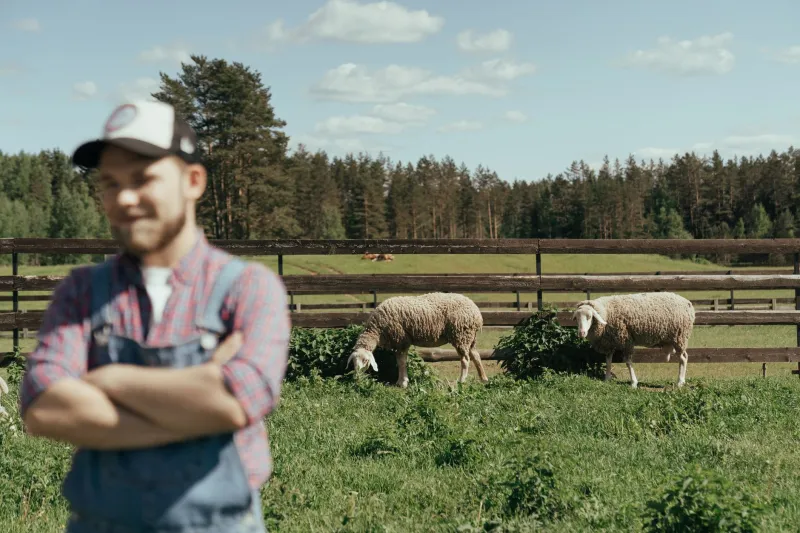
For generations, the unwritten code of rural America held that a farmer's numbers were his own business. Yield per acre, input costs, equipment inventory—these were kept close, shared only over a handshake at a feed store or perhaps whispered between families at a county fair. The idea that a neighboring operation might have formal access to any of that information would have struck most growers as somewhere between uncomfortable and unthinkable.
That calculus is shifting. As farm registry platforms expand across the country, a growing number of agricultural communities are finding that voluntary data transparency—the deliberate, structured sharing of operational records—is producing outcomes that neither competition nor isolation ever could. The experience of those communities offers a nuanced picture: one where visibility creates friction, yes, but also where it generates cooperation powerful enough to change the economics of entire rural regions.
When the Fence Line Becomes a Data Point
Consider what happens when two neighboring grain operations in central Illinois both register their farm profiles on a shared platform. Suddenly, acreage figures, crop rotation histories, and equipment rosters are no longer matters of rumor or assumption. They are documented, verifiable, and—within the terms of the registry—accessible to participating members of the local agricultural community.
For some farmers, that level of visibility triggers an instinctive wariness. Decades of operating in a competitive environment condition growers to guard information the way they guard seed varieties or soil amendments. The concern is understandable: if a neighbor knows your yields are strong, does that give them leverage in a shared land lease negotiation? If they can see you own a piece of equipment they need, does that shift the power dynamic when you discuss rental terms?
These are legitimate questions, and registry platforms that serve agricultural communities well take them seriously. The answer, according to farmers who have navigated these dynamics, is rarely as threatening as the initial instinct suggests.
"I was skeptical at first," said one row crop farmer in western Iowa who asked to be identified only by his first name, Dale. "I figured if my neighbor could see what I was pulling per acre, he'd use it against me somehow. What actually happened was that we started talking more honestly than we ever had before. The data was just the opening."
The Cooperation Dividend
The most immediate and measurable benefit of farm registry transparency among neighboring operations is what agricultural economists sometimes call the cooperation dividend—the tangible financial gains that emerge when farms coordinate rather than compete on non-market activities.
Equipment sharing is perhaps the clearest example. A combine harvester capable of working three thousand acres per season is a significant capital investment for an operation running eight hundred acres. When a registry profile shows that a neighboring farm owns precisely that machine and uses it intensively for only six weeks per year, the path to a formal rental or cost-sharing agreement becomes obvious. Without the registry, neither party may have known the opportunity existed. With it, both operations reduce overhead.
The same logic applies to bulk purchasing. When a registered cluster of farms within a county can aggregate their input requirements—seed, fertilizer, fuel, crop protection products—the combined volume creates negotiating leverage that no single operation could achieve independently. Several agricultural cooperatives in the Midwest have begun using registry data to facilitate exactly these arrangements, allowing member farms to identify purchase partners based on crop type, acreage, and timing requirements.
Market negotiations represent a third arena where shared data changes outcomes. Grain buyers, food processors, and direct-market purchasers increasingly prefer to contract with aggregated supply rather than individual farms. A registry that documents the combined production capacity of a regional cluster of farms gives those farmers a credible, verified basis for approaching buyers as a unified supplier—a significant commercial advantage.
Navigating the Psychology of Visibility
The practical benefits are real, but the psychological dimension of farm registry transparency deserves equal attention. Rural communities carry deep histories, and the relationships between neighboring farm families are rarely simple. Generational land disputes, competitive land rental markets, and the quiet social hierarchies of agricultural towns all shape how farmers interpret and respond to each other's data.
Research on information sharing in tightly networked communities consistently finds that visibility cuts both ways. It can reduce the asymmetries that allow one party to exploit another's ignorance, but it can also surface comparisons that generate anxiety or resentment. A farmer whose yields have lagged behind a neighbor's for several seasons may find registry access motivating—or demoralizing, depending on how the information is framed and what support structures exist around it.
The farms that report the most positive experiences with registry transparency tend to share a few characteristics. They operate within communities that have established explicit norms around data use—informal agreements about what information is shared with whom, and for what purposes. They have access to extension services or agricultural advisors who can help contextualize comparative data in constructive ways. And they approach the registry not as a surveillance tool but as a coordination infrastructure.
"The data doesn't tell you what to do with it," noted an agricultural extension specialist working with farm clusters in the Missouri River valley. "Two farms can look at the same information and one sees a threat and the other sees an opportunity. The community culture determines which way it goes."
Building Healthy Information-Sharing Communities
For farm registry platforms, the challenge is not simply to collect and display data—it is to design environments in which that data produces constructive outcomes. Several principles have emerged from communities that have managed this well.
First, participation must be genuinely voluntary and clearly bounded. Farmers who feel coerced into sharing information, or who are uncertain about what they have consented to share and with whom, become adversarial toward the platform and toward each other. Transparent consent structures and granular privacy controls are not optional features; they are foundational to community trust.
Second, the value exchange must be visible. Farmers who contribute data to a registry should be able to see, concretely, what they receive in return—whether that is access to aggregated market intelligence, equipment-sharing connections, or bulk purchasing opportunities. When the benefits are abstract or delayed, participation rates fall and the data thins to the point of uselessness.
Third, registry platforms benefit from active community stewardship. In the most functional agricultural data communities, there are human intermediaries—co-op staff, extension agents, or trusted farmer-leaders—who help interpret shared information, facilitate introductions between potential collaborators, and mediate when disputes arise. Data alone does not build community. People do.
A New Kind of Rural Relationship
The farms that are thriving within registry communities are not abandoning competition. They are becoming more sophisticated about where competition serves them and where cooperation does. They compete in the marketplace, for land, for buyers, and for premium prices. They cooperate on infrastructure, on purchasing, on logistics, and increasingly on advocacy—using their aggregated documented presence to make a stronger case to lenders, insurers, and policymakers.
This is, in some respects, a return to an older model of agricultural community—one in which neighbors genuinely knew each other's operations and found ways to work together without surrendering their independence. The difference is that today's registry platforms make that knowledge formal, portable, and actionable in ways that a handshake conversation never could.
The fence line between two farms has always been, in part, a social boundary. What farm registry transparency is revealing is that the boundary does not have to be a barrier. Documented, well-governed information sharing is turning neighbors into networks—and in rural America today, that distinction may matter more than any single season's yield.