After the Storm: Why Unregistered Farms Are the Last to Recover When Disaster Strikes
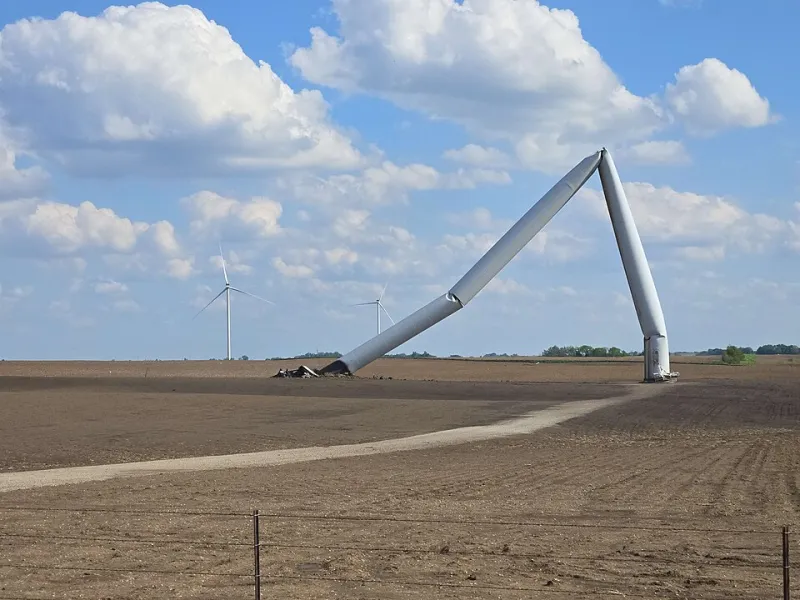
Photo: National Weather Service, Public domain, via Wikimedia Commons
The tornado touched down on a Tuesday morning in late April. By the time the winds subsided, nearly 400 acres of winter wheat in a rural Kansas county had been flattened, two equipment sheds reduced to rubble, and an irrigation system that had taken a family three decades to build lay twisted beyond repair. Within 48 hours, the county agricultural extension office was fielding calls from farmers seeking guidance on USDA disaster assistance applications.
For some, the process moved relatively quickly. For others — particularly those without formal farm registration records — the road to recovery stretched into months of bureaucratic uncertainty, documentation requests, and delayed payments that threatened their ability to plant the following season.
This disparity is not accidental. It is the predictable consequence of operating outside the documentation systems that modern disaster relief programs are built upon.
How Disaster Assistance Programs Use Farm Records
The USDA administers several programs specifically designed to help agricultural producers recover from natural disasters, including the Emergency Loan Program through the Farm Service Agency, the Livestock Indemnity Program, and the Noninsured Crop Disaster Assistance Program. Each of these programs requires applicants to demonstrate what they had before the disaster occurred.
Proving a loss, in bureaucratic terms, means proving a baseline. Adjusters and program coordinators need to verify acreage, crop type, livestock inventories, and operational history. When a farmer has maintained consistent records through a recognized registry platform, that baseline already exists in a structured, verifiable format. When a farmer has not, the burden of reconstruction falls entirely on them — at precisely the moment they are least equipped to handle it.
Disaster recovery coordinators working across the Midwest and Southeast have noted a consistent pattern. Farmers who arrive at FSA offices with documented registry records, historical yield data, and verified acreage maps move through the intake process significantly faster than those presenting handwritten ledgers, inconsistent receipts, or no documentation at all. The difference can mean weeks — sometimes months — between an approved claim and one still pending secondary review.
The Verification Problem
At its core, the challenge facing unregistered farmers during disaster recovery is a verification problem. Federal programs are accountable to Congress and to taxpayers, which means program administrators cannot simply accept a farmer's word about what was lost. They require corroborating evidence.
A comprehensive farm registry profile serves as precisely that corroboration. When a farmer has registered their operation with accurate acreage data, crop histories, equipment inventories, and operational descriptions, that information can be cross-referenced against satellite imagery, county records, and insurance documentation to build a coherent picture of pre-disaster conditions.
Without registry documentation, the verification process becomes investigative rather than confirmatory. Program staff must independently attempt to reconstruct the farm's operational history using whatever fragmented records can be located. This takes time. It introduces uncertainty. And in some cases, it results in claims being reduced or denied entirely because the evidentiary threshold simply cannot be met.
A disaster recovery specialist working with a USDA partner organization in the Mississippi Delta described the situation plainly: farms that had invested in formal documentation consistently received faster determinations and, in several documented cases, larger initial payments because the full scope of their losses could be clearly established from the outset.
State-Level Programs Face the Same Constraints
The documentation challenge extends well beyond federal programs. Many states have developed their own agricultural disaster assistance mechanisms, often funded through emergency appropriations or agricultural development funds. These programs frequently operate with even tighter timelines than federal counterparts and may have less administrative capacity to work through undocumented claims.
In states such as Iowa, North Carolina, and California — each of which has experienced significant weather-related agricultural losses in recent years — state-level disaster programs have moved toward requiring registry verification as a condition of application. Farmers who are already registered can often complete the intake process online within days. Those who are not must first establish their operational record before their claim can even be formally received.
The practical implication is that an unregistered farmer in a disaster zone may spend the first critical weeks of the recovery period attempting to build the documentation infrastructure that a registered farmer already had in place — time that could otherwise have been spent on physical recovery.
What Registration Provides Before, During, and After a Crisis
A farm registry profile is not simply a bureaucratic requirement. It is a living operational record that serves multiple functions across the agricultural calendar. Before a disaster, it establishes the baseline that recovery programs require. During a disaster, it enables faster communication with relief coordinators and emergency responders who need to understand what is at risk in a given area. After a disaster, it provides the evidentiary foundation for claims, appeals, and ongoing recovery documentation.
Farmers who register their operations with FarmRegistry USA create a structured, timestamped record of their acreage, production history, infrastructure, and operational characteristics. This record is not static — it can be updated as operations evolve, as new equipment is acquired, or as land use changes. Each update adds another layer of documentation that strengthens the farmer's position in any future claims process.
A Practical Roadmap for Farmers
The time to address documentation gaps is not in the immediate aftermath of a flood or tornado. The time is now, during ordinary operations, when the pressure of crisis is absent and accurate records can be assembled thoughtfully.
Farmers who have not yet formalized their operational records should begin by gathering the information that disaster programs most commonly require: total acreage by crop type, equipment inventories with approximate values, livestock counts, infrastructure descriptions, and production history for at least the prior three years. This information forms the core of a useful registry profile.
Once compiled, that information should be registered through a recognized platform and kept current. Any significant changes to the operation — new land acquisitions, shifts in crop mix, major equipment purchases — should be reflected in the registry record promptly rather than deferred.
Farmers should also familiarize themselves with the specific documentation requirements of the disaster programs most relevant to their operation and region. The FSA maintains program-specific guidance that outlines exactly what records are required for each type of assistance claim. Aligning a farm registry profile with those requirements ensures that the documentation will serve its intended purpose when the time comes.
The Cost of Waiting
Natural disasters do not announce themselves in advance. Droughts develop gradually, but floods and tornadoes arrive without warning. The farmers who are best positioned to recover are those who treated documentation as an ongoing operational responsibility rather than a reactive measure.
The registry gap — the distance between what a farmer has documented and what a disaster program requires — is a gap that widens with every season a farm operates outside formal registration systems. Closing that gap requires nothing more than the deliberate effort to record what already exists.
For American farmers, that effort is not simply good administrative practice. It is, increasingly, the difference between recovering from the next storm and being left waiting long after the clouds have cleared.